
A lot of DMs, especially beginner DMs, are nervous about letting the players choose their own path. What if they do something I'm not prepared for? or worse, What if they do something that breaks the story? This leads to what is called railroading: forcing the players onto the path you write for them, without a chance for them to make their own choices. Railroading is bad, except in specific cases where you know precisely what you are doing.
If railroading is at one end of the spectrum, then the other end would be sandboxing. This is a type of game where the DM has no pre-set story or plan, and lets the players do what they will. At its most extreme, this means that plot hooks are not given, and the players are left to hunt down possible adventures. This, like railroading, is bad unless you know what you're doing. So what do you do? Find a happy medium, and that's what I'll talk about today
Why is Sandboxing Bad?
Okay, so it's not really bad, but its much harder for newer DMs, and it requires a certain type of player (a rare type of player in my experience) for it to work. Generally, it's something we want to avoid. A more precise reason why sandboxing isn't that great is because of the idea of choice paralysis. The Angry DM puts it very ellegently as "The Peanut Butter Conundrum." The idea is this: buying peanut butter is a simple goal. But when you get to the store you find out you have dozens of brands to choose from. You have salted or unsalted, smooth or chunky, low salt or low sodium, natural or processed, or with low oil. Do you want it pre-mixed with jam for PB&J? What kind of jam? Pretty soon the choices add up and you're left unable to choose.
Players with too many options are left in this situation. They can't see what all the choices affect, and there's too much to handle. My solution to this is simple and easy to implement, and I touched on it in my article about plot hooks. The idea is to use what I call choice points.
What are Choice Points?
Simply put, a choice point is a point in the story where the players have between 2 and 5 options of where they want to direct their efforts. These choices can be completely unrelated, or they can be different methods of solving the same problem. This setup has two distinct advantages:
- The DM controls which options the players have based on previous decisions, while still giving the players the ability to have their actions effect future choice points.
- The players have free-reign to act however they want within the scope of the choices they're given.
Linking multiple choice points together
Another benefit of this method is that you can link choice points together to create a truly unique and player driven campaign. As my players first chose to help the dwarves, they created a safe-haven for the time being. They could then choose to investigate several leads they found while helping the dwarves, each of which is slightly different. After they investigated one lead that would lead to several more decisions, and so on.
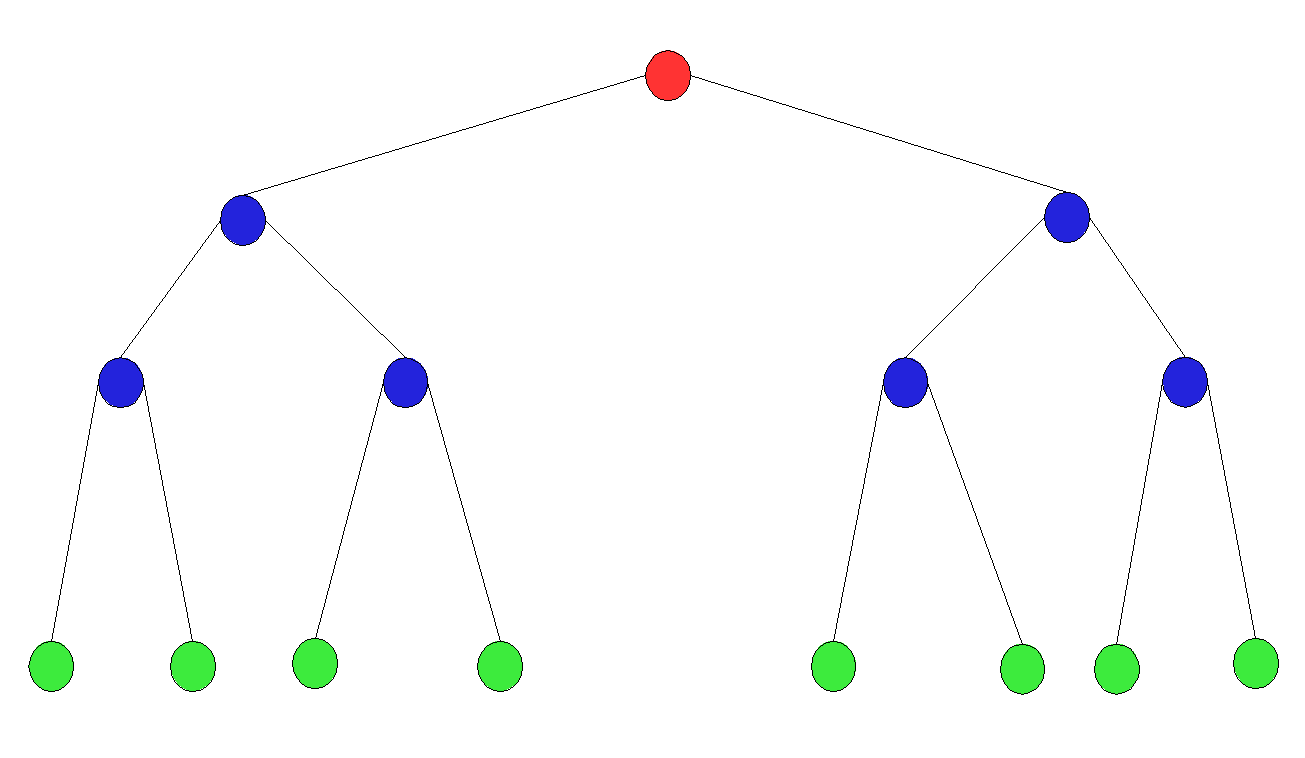 |
| Visual representation of choice points |
What you end up with is like a binary tree. At the top they have the starting point with several options; they pick one option, and that leads to another node with several choices. They pick one of those choices and continue until they hit another choice point, until eventually you've got one long story leading from the beginning to the end, all made up of choices by the players, while still keeping the overall story and theme the DM wants.
Hopefully this helps all you new DMs manage the infinite possiblities of player choice, and makes your game better. Happy gaming!

very interesting...and i like your new blog layout
ReplyDeleteReally interesting, everytime i read your blog i get the urge of getting those d&d books out of the shelves. One day, one day.
ReplyDeleteOh binary trees, how i miss college.
ReplyDeleteGreat layout. Also really interesting
ReplyDeleteMan you really know what you're talking about. So detailed!
ReplyDeleteThe new layout is fantastic, and this post was really well thought out and informative. Good read.
ReplyDeleteInteresting post.
ReplyDeleteDMs are responsible for shaping the world where players gonna act, that's why sandboxing don't work
ReplyDeleteI love sandboxing! Let the players run around a bit, get acquainted with their surroundings, and then the fire starts raging on the other side of town.
ReplyDeleteThat's the fun thing about being a DM. You can have nothing but a beginning and an end, and as long as you're creative enough you can write the story in between as you go
Is the type of rare player you are referencing one who actually wants to have a good game, and doesn't require the DM to restrain their actions from being gamebreaking?
ReplyDeleteDamn, interesting read and kewl blog! following
ReplyDeleteThat's really great. Thank you. I'll need this soon since I'm starting my own campaign.
ReplyDelete@Xenototh: No, that's a normal player. I'm talking about a campaign where the DM gives no indication of story or plot, and the players are left to themselves. Like playing World of Warcraft without the quests.
ReplyDelete@SeweingCircles: You're very welcome. If you have a specific topic you'd like me to cover let me know.
ha.. this was really interesting!
ReplyDeleteDM is pretty fun once you get a good game going
ReplyDeleteGreat article man, love reading up on its progress.
ReplyDeleteI like this, good read
ReplyDeleteGood post.
ReplyDelete